Ram Air Introduces New Version of 4 Place Immersion / Hazmat / Bunker Gear Dryer

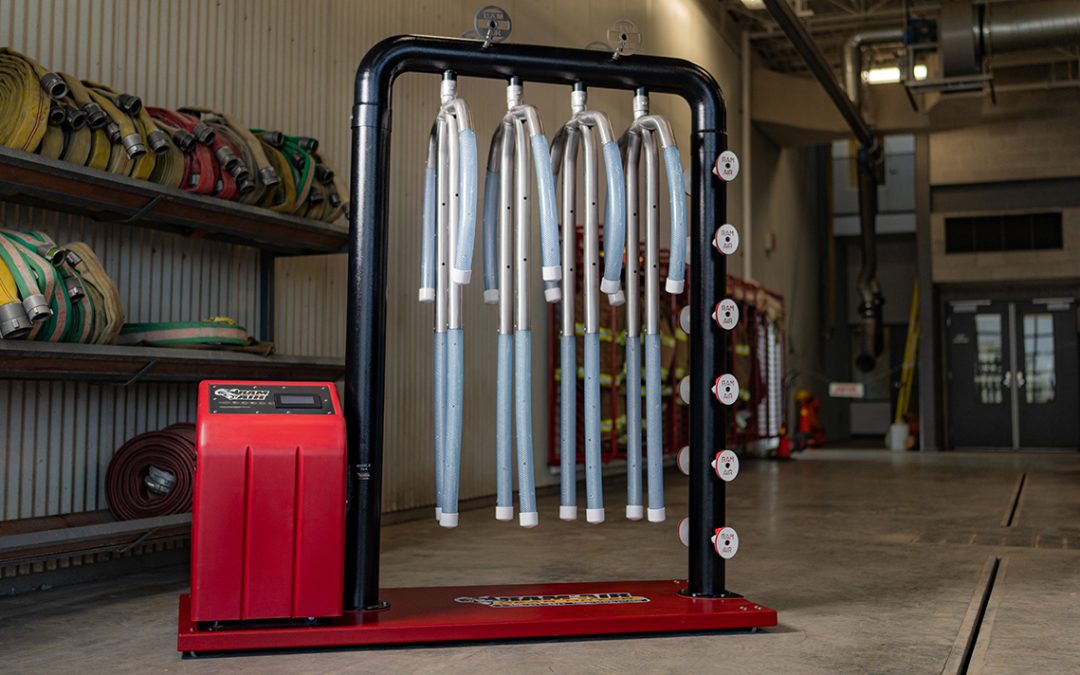
Ram Air has added 6 additional drying ports to the popular 4-IHT – 4 Place Immersion / Hazmat / Bunker Gear Dryer. The dryer now has 6 ports on each side for a total of 12 drying ports.

FDIC 2012 Booth Draw Winner

We would like to congratulate the winnner of our draw for a Viper Select Nozzle (worth MSRP $686.00).

Chief Abe Schlabach from the Millersburg-Clinton Fire Territory located in Goshen, Indiana

FRI 2012 – August 1 – 4

Ram Air Gear Dryer will be exhibiting at FRI 2012 in Denver, Colorado
Booth 14051

Map of Floorplan 2012 – Booth 14051 – Ram Air Gear Dryer

FDIC 2012 – April 16 – 21

Ram Air Gear Dryer will be exhibiting at FDIC 2012 in Indianapolis
April 16-21, 2012
Indiana Convention Center & Lucas Oil Stadium
Booth 3575

FDIC 2012 website
Map of Floorplan 2012 – Booth 3575 – Ram Air Gear Dryer

Ram Air Gear Dryer Now ETL Listed

Ram Air Gear Dryer is now ETL Listed.

ETL Testing Laboratories has been conducting electrical performance and reliability tests since 1896. Intertek Testing Services (ITS) acquired ETL from Inchcape in 1996. ITS is recognized by OSHA as a Nationally Recognized Testing Laboratory (NRTL), just as Underwriters Laboratories (UL), Canadian Standards Association (CSA) and several other independent organizations are recognized.

ITS tests products according to nearly 200 safety and performance standards. The ETL Listed Mark and C-ETL Listed Mark are accepted throughout the United States and Canada when denoting compliance with nationally recognized standards such as ANSI, IEC, UL, and CSA.

This certification mark indicates that the product has been tested to and has met the minimum requirements of a widely recognized (consensus) U.S. product safety standard, that the manufacturing site has been audited, and that the applicant has agreed to a program of periodic factory follow-up inspections to verify continued conformance.

If the mark includes a small US and/or C, it follows product safety standards of United States and/or Canada, respectively

FDIC 2011 – Floor Plan Booth 3567

FDIC 2011 Floor PlanClick on the image for a printable PDF file of the FDIC 2011 Floor Plan.

Ram Air Gear Dryer – Booth 3567
Indiana Convention Center
Printable PDF file of above image
Interactive Floor Plan (from FDIC.com)

Visit Us At FDIC 2011

FDICRam Air Gear Dryer would like to invite you to our booth at FDIC 2011.

We are exhibiting at booth #3567 in the Indianapolis Convention Center. We will have functioning dryers for you to touch, test and feel.

Come and see why our dryers stand out from the competition!

Firefighter/EMT Safety, Health & Survival: MRSA Contamination

IAFC On Scene: August 15, 2010

IAFC.org original article

Methicillin-resistant Staphylococcus aureus (MRSA) was first identified in the 1960s, and in the last 10 years, it has become a major pathogen. MRSA can be transmitted from any inanimate object (formites) to a person as well as person to person. Because of this, patient-to-firefighter and firefighter-to-firefighter transfers have become an increasing concern.

MRSA has also been isolated from razors, towels, gym equipment, bar soap, mops and a variety of medical equipment. MRSA colonization—the presence of the bacteria, but no signs of illness or infection—is a known risk factor for future MRSA infections. Other known risk factors for MRSA infections in the community at large include previous antibiotic therapy, extensive hospital stays, surgery, living in a long-term care facility, kidney dialysis, the presence of invasive medical devices and interaction with people infected with MRSA.

Unfortunately, community-acquired (CA) MRSA infections are on the rise, and outbreaks of skin and soft-tissue infections have occurred among healthy firefighters with no health-care exposure or known classical risk factors. Some risk factors associated with CA-MRSA outbreaks include:

- Shared personal care products
- Frequent skin-to-skin contact
- Skin abrasions
- Crowded living conditions
- Treating people with MRSA infections

In today’s environment, it’s likely that firefighters and paramedics will treat patients with current or past MRSA infections or who are currently colonized with MRSA. A recent Tucson, Ariz., study sampled commonly touched sites at nine fire-related occupational and training facilities. Of 160 sites sampled, 6.9% were MRSA-contaminated.

In that study, the couches with soft, porous material had the highest percentages of MRSA contamination while no MRSA was found on the surfaces of their ambulances or fire trucks. In contrast, a 2010 study found 49% of ambulances in southern Maine were contaminated with MRSA.

There was no statistical difference between fire-based vs. non-fire-based ambulances or annual call volume. There was, however, a statistically significant lower rate of contamination in services that provided paid, 24-hour coverage versus those that didn’t.

A recent yearlong study of two Northwest fire stations from two different fire districts was conducted by Dr. Roberts (one of the authors) and colleagues at the School of Public Health at the University of Washington in Seattle. The study isolated MRSA from 44 (4.2%) of 1,060 samples examined and included USA300 and hospital-like (HA) MRSA isolates.

USA300: Genetically related isolates which causes >90% of common CA-MRSA infections in the USA; infects people with no risk factors in the community and is now found in the hospital.

MRSA was isolated from samples taken from the inside and outside surfaces of fire apparatus (medic/aide rigs, engines and trucks) as well as specific equipment and equipment bags, fire-station garage floors, water coolers, computer keyboards, kitchen appliances, phones, TV remote controls, cloth chairs, desks, bathroom and gym surfaces, washing machines and fire-protection clothing. The same strains of MRSA were found in both the dirty apparatus sections and the clean living quarters.

A recent study from Children’s Hospital Los Angeles suggests MRSA can survive on some nonporous surfaces up to eight weeks following contamination—and skin transmission takes only three seconds. In addition, the presence of organic matter generally increases the survival of pathogenic bacteria fomites. Surfaces visibly soiled provide the perfect medium for the possibility of increased exposure to surviving pathogens, causing a higher probability of exposure to MRSA than a cleaned surface.

In the community at large, 25-35% of the population is colonized with S. aureus and 0-2% with MRSA. As part of the University of Washington study, nasal colonization was examined in 40 firefighters within one of the fire districts. In this small sample, 22.5% of the personnel were colonized with MRSA and 10% colonized with Staphylococcus aureus. The majority of the nasal MRSA/S. aureus isolates were genetically related to the environmental fire station MRSA strains, suggesting transmission between personnel and environmental surfaces may be occurring.

The University of Washington MRSA grant was funded by Washington State Safety & Health Investment Projects.

To reduce the levels of MRSA contamination, the recommendations derived from the University of Washington study included the following:

Fire Stations
- Use cleaners/disinfectants that are EPA-registered for MRSA
- Daily clean each of the following:
– fire apparatus and medic/aid car interiors with appropriate disinfection products
– kitchen area, including appliances
– all apparatus floors
– all fire station floors
- Weekly cleaning of mop heads and sponges with disinfectant
- Station uniforms cleaned and left at the station
- Discontinue placing feet on furniture
- When buying new furniture make sure it is easily cleanable surface and eliminate cloth fabrics

Fire Personnel

Skin rashes and/or infections, which do not improve within 2-3 days with topical over the counter antibiotics, should be seen by a clinician.
Personnel with repeated MRSA infections should discuss with their doctor decolonization of fire personnel and potentially family members.
Record keeping should be done to determine if any one station is having a cluster of MRSA infections, which would require additional protocols to reduce spread between personnel from continuing.

Marilyn C. Roberts, PhD, is a professor in the School of Public Health, University of Washington. Her current research includes identification of MRSA on environmental surfaces and how to reduce contamination levels of these surfaces. Kim C. Favorite is the Occupational Health & Fitness Coordinator for the Seattle Fire Department. She’s a member of the IAFC’s Safety, Health and Survival Section and has been a technical advisor for the Fire Service Joint Labor-Management Wellness-Fitness Initiative since 1996.

IAFC.org original article

“Dry Out” Article from FireChief.com

Drying Out
FireChief.com
Feb. 1, 2008

By Rick Markley

“Whether it has just come out of the laundry or off an intense fireground, turnout gear gets wet. And when it does, it must be dried thoroughly before the next call. McKinney, Texas, Fire Chief Mark Wallace says it is important to have personal protective equipment that is fully dry. At a fire, the water in partially wet gear can boil, causing steam burns to the firefighter wearing it.

Air drying gear is cheap but takes a long time. Using a dryer has purchase and use costs, but works fast. There also are space considerations and the likelihood that gear will get cleaned. So like most things, choosing the best method for drying turnout gear comes down to departmental circumstances and resources.

The National Fire Protection Association’s regulation 1851 on turnout gear briefly touches on drying techniques. NFPA says to first follow manufacturers’ care instructions. If there are none, NFPA says that air drying should be done in a well-ventilated area, away from direct sunlight. For machine drying, 1851 advises that all closures, such as snaps, hooks and zippers, be fastened. It also says to use no-heat or air-dry options when available. If those options are not available, the maximum drying temperature must not exceed 105°F. The regulation says not to allow the machine to fully remove the moisture during the heat cycle, but rather to switch to no heat or remove the gear and allow it to air dry the rest of the way.

Lion Apparel, a turnout gear manufacturer, recommends that after laundering, the gear be turned inside out to expose the inner surfaces. The company says to dry the gear by hanging it in a shaded area that receives good cross ventilation or using a fan to circulate the air. The company says not to use automatic dryers because the mechanical action and excessive heat may damage or shrink the garments. Also, it says that hanging garments to dry in direct or indirect sunlight, or in fluorescent light will severely reduce the strength of the seams and discolor the garments.”

In McKinney, Wallace has been buying drying systems by Air Ram. That system blows unheated air through perforated pipes. McKinney has six fire stations and a seventh under construction. It is a career department with 146 firefighters that covers 60.5 square miles. Wallace says some stations still are using low-heat tumble dryers while others air dry bunker gear. The switch to drying cabinets follows recommendations by the department’s safety gear committee, he says.

“Heating the outside of the gear as it tumbles in a low-heat dryer doesn’t dry the gear evenly,” Wallace says. “Air drying using no system and without exposing the gear to direct sunlight takes a long time, and the gear may not be dry for the next shift.”

The Air Ram system will dry as many as six sets of pants, coats, boots and gloves in about four hours, Wallace says. Because of the time it takes for air drying, he says, firefighters are less likely to wash their gear often. Another downside to air drying is the amount of space required if there is a lot of gear to be dried after a big call.

For a small department, getting eight or 10 sets of gear quickly cleaned and dried is an issue following a large fire. As a fallback, Rielage keeps several sets of older gear on hand to use in such emergencies. But the number of sets and the sizes are limiting factors.”

“Like Wallace, Rielage says air drying alone can keep gear out of service for one day or longer. His plan to combine low-heat and air drying should shave a few hours off drying time while still preserving the gear’s integrity, he says.”

Turnout Gear And Lifeline Cleaner “CitroSqueeze”

CitroSqueeze
CitroSqueeze® has been tested and proven safe by:
• DuPont for cleaning Nomex
• Southern Mills for cleaning P.B.I. and Kevlar
• W.L. Gore and Associates (Germany) for cleaning Gore-tex
• 3M Products for cleaning Scotchlite® Retroreflective Firecoat Trims #8486/7, 9825, 8930, 8935, 8986/7, 9910, and 9486/7.

For easy ordering, click here:
or call:
(800) 713-0677
Proudly used by Fire Departments in:
Charlotte NC, Brevard and Broward Counties FL, Fairfax County VA, Topeka KS, Phoenix AZ, Denver CO, Los Angeles CA, Ft. Worth TX, St. Louis MO, El Paso TX and hundreds more!

Polls

Do you think your personal protective gear dryers should operate using heat?

View Results

Loading ... Loading ...
Slideshow
Get the Flash Player to see the slideshow.