January is Firefighter Cancer Awareness Month
January 23, 2026
While cancer prevention must be practiced every day, January is an ideal time to review SOPs and ensure your department is doing everything possible to reduce exposure to carcinogens, an ongoing risk with a well-documented link to the fire service.
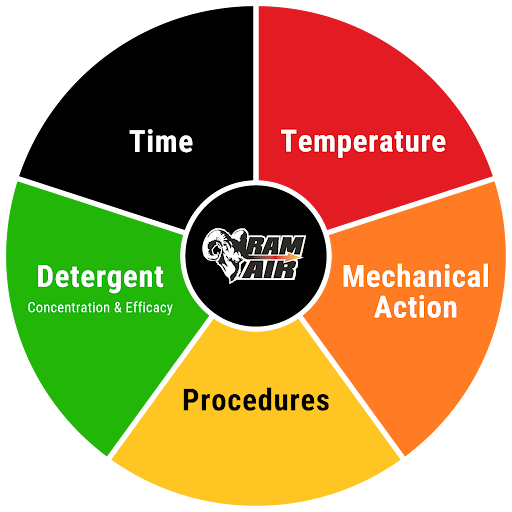
Effective gear cleaning depends on five factors working together.
Understanding the Bunker Gear Wash Cycle
A bunker gear wash cycle consists of six phases, each with different water temperatures, spin speeds and directions, water levels, and durations. Within each phase is a combination of five key factors that determine overall cleaning efficacy:
1. Time
2. Temperature
3. Chemical
4. Mechanical Action
5. Procedure
1. Time
When washing bunker gear, faster is not better. NFPA base guidelines indicate a total wash time of 35-39 minutes, which includes only the time the machine is actively moving, not fill or drain time.
It's also important to understand how NFPA guidelines are applied. The 120°F water temperature and 100G extraction speed are maximum allowable values. When determining pre-soak and main wash durations, these values should be treated as minimum requirements.
Allowing additional time in the pre-soak and main wash phases improves detergent performance and increases overall cleaning efficacy.
2. Temperature
120°F is the maximum allowable temperature- but maintaining it matters.
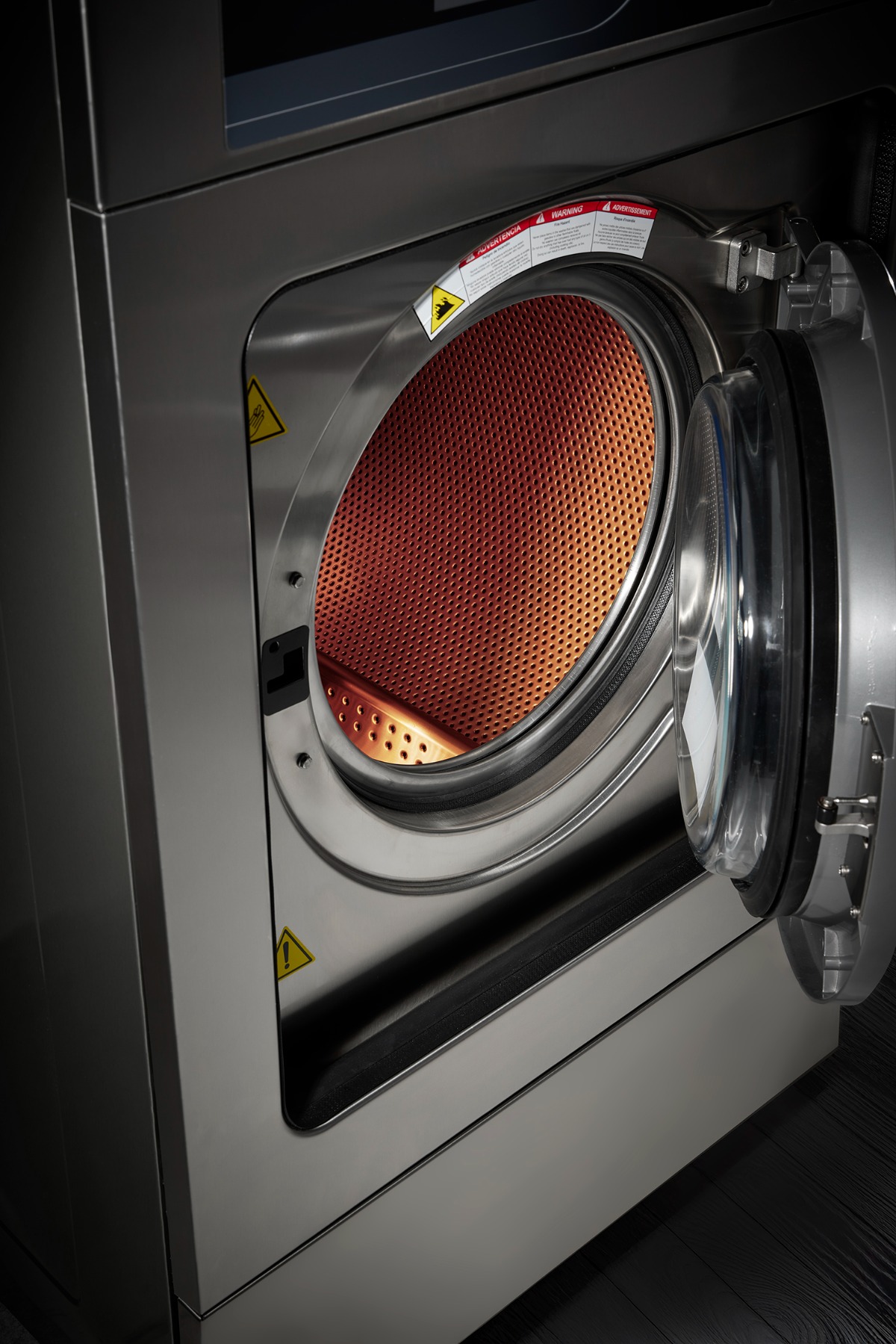
NFPA has increased the maximum allowable wash temperature for bunker gear to 120°F. Higher temperatures increase detergent effectiveness and improve contaminant removal.
Extractors equipped with a heated drum can maintain water temperature throughout the pre-soak and main wash phases. Without this feature, water temperature can drop significantly, often by as much as 20°F before the drum is fully filled. A temperature drop this large can reduce detergent performance and overall wash effectiveness.
Maintaining consistent water temperature throughout the wash cycle should be a priority when selecting and programming an extractor.
3. Chemical / Detergent
Hard water requires more detergent to achieve the same level of clean.
Not all bunker gear detergents perform the same. When searching for a detergent, ensure it has a pH level between 6.0-9.5 (NFPA compliant), and has data that proves efficacy in cleaning hydrocarbons and carcinogens.
Detergent should be added during both the pre-soak and main wash phases. NFPA guidelines require the drum to be drained between phases, so failing to reintroduce detergent reduces cleaning effectiveness.
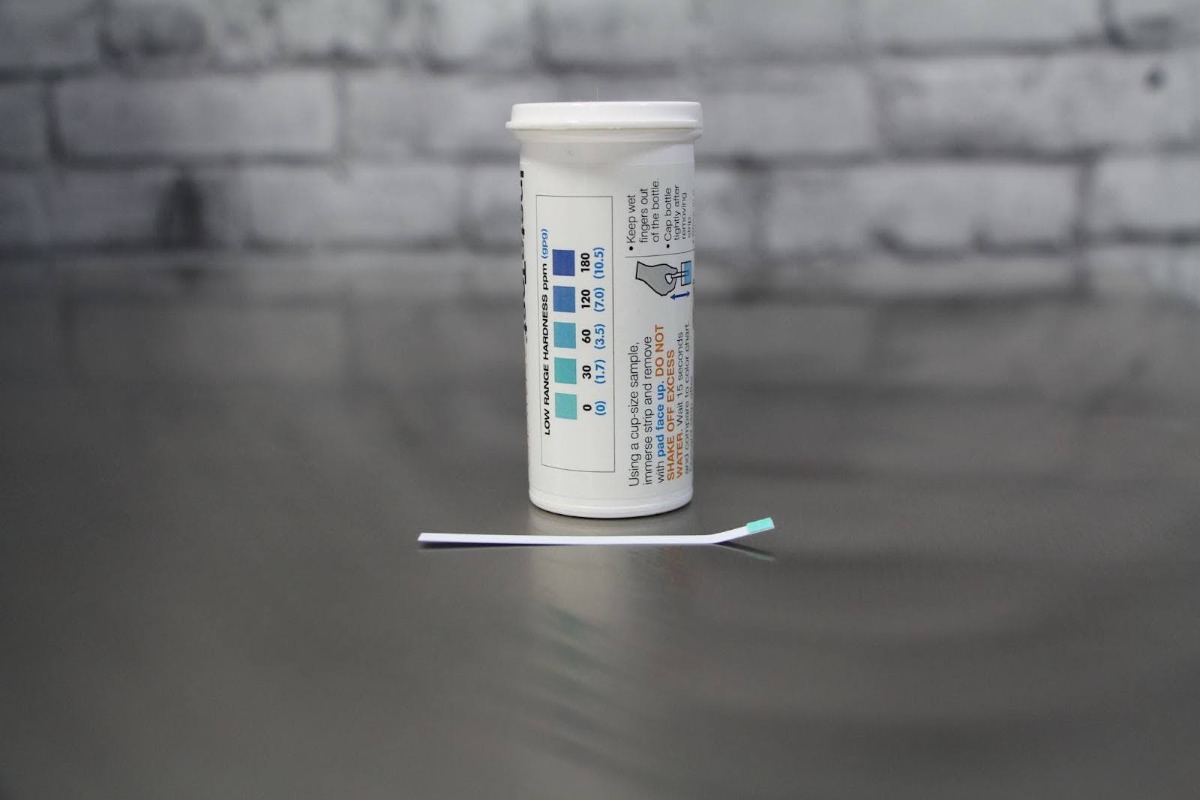
Water hardness also plays a critical role in detergent performance. Departments should test both hot and cold-water hardness to determine proper detergent dosing. Hard water requires higher detergent volumes to achieve the same cleaning results as departments using soft water.
4. Mechanical Action
Your extractor should allow control over spin speed and direction during each wash phase and be loaded to capacity. Proper agitation and repositioning are necessary for water and detergent to penetrate the entire garment.
During the pre-soak and main wash phases, the machine should:
- Rotate to reposition gear in the drum
- Pause to allow water and detergent to penetrate gear
- Alternate the spin direction after each pause
This process ensures all surfaces of the gear are exposed, improving the removal of hydrocarbons and carcinogens embedded in the fabric.
5. Procedure
Bunker gear wash procedures should be easy to follow and easy to repeat. NFPA outlines separate wash cycles for outer shells and inner liners. We recommend increasing the time for the pre-soak and main wash phases of the wash cycle for heavily soiled bunker gear.
Extractors with touchscreen controls allow firefighters to easily select the correct cycle, reducing errors and eliminating complex button sequences.
Autodosing detergent systems will administer the correct volume of detergent at the appropriate wash phases. Departments may also use the extractor's soap box, provided they have separate detergent compartments that flush independently during the pre soak and main wash.
Effective bunker gear washing requires proper capacity loading. Overloading restricts gear movement and hinders mechanical action. Underloading prevents the extractor from reaching optimal spin speed.
Clear procedures and intuitive controls increase compliance, and consistent compliance is key to reducing exposure risks.

Contact Us
x 1-888-EZEE-DRY (1-888-393-3379)
A info [at] ramairgeardryer [dot] com
